Quality is paramount in shipbuilding. But did you know that humidity also affects the quality of a yacht? Fluctuations in humidity can cause major problems both during the construction of the vessel and during the finishing and fitting-out work on board.

Drying out, shrinkage and cracking in the wood
Wood is highly sensitive to fluctuations in humidity. When humidity is high, wood absorbs moisture, whilst when humidity is low, it releases moisture. This can cause the wood to dry out. This often has serious consequences: the wood may shrink, crack or split. Consequently, the quality and value of the wood are reduced. In some cases, it may even become unusable.
Dimensional variations
When the air is too dry, wood can shrink. In yacht building, only minimal dimensional variations are typically permitted, meaning that even slight shrinkage can have major consequences. For example, components may no longer fit properly, resulting in gaps or openings. This means the structure does not fit together as well as it should, whilst the customer expects a high-quality end product. To still meet these quality requirements, components must be remanufactured. This takes extra time and entails higher production costs.
Poor paint drying
The quality of paintwork is also affected by humidity. If the humidity is too low, the paint may not dry properly. The solvents then evaporate too quickly, preventing the paint from drying evenly. This can result in an uneven coat of paint.
Dust reduction
Woodworking often generates a lot of dust in the workshop. By maintaining the correct level of humidity, the amount of airborne dust can be reduced. Humidity makes fine dust particles heavier, causing them to settle more quickly. As a result, less dust remains airborne, which contributes to a clean and comfortable working environment.
Humidity requirements for quality marks
Certain quality marks, including the KOMO quality mark, have specific humidity requirements. This quality mark guarantees the quality of timber products. To meet the conditions of the quality mark, both timber processing and storage must take place under the correct humidity levels.
The following guidelines, amongst others, apply:
Untreated timber must be stored at a relative humidity of 55 per cent.
For flash-off applications, a relative humidity of more than 70 per cent is required.
Daarbij gelden onder andere de volgende richtlijnen:
- Untreated timber must be stored at a relative humidity of 55%.
- For flash-off applications, a relative humidity of more than 70% is required.
Adiabatic cooling
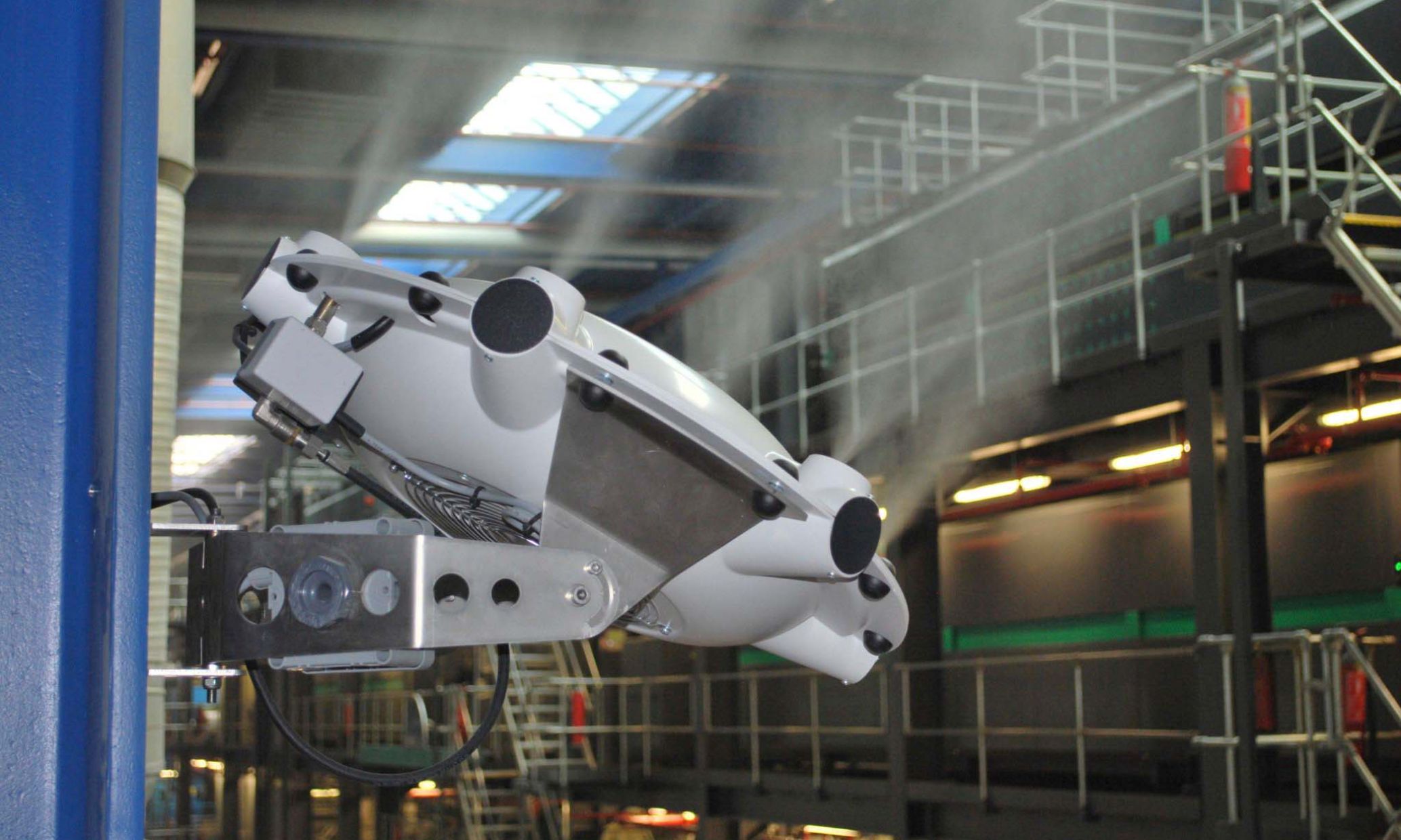
In environments with heat-generating machinery, there may be a high heat load. Adiabatic humidification utilises heat from the air. During the evaporation process, the air cools down. This effect is also known as the adiabatic cooling effect and ensures a more comfortable working environment.
Optimal relative humidity
Well-controlled humidity is essential in shipbuilding to guarantee material and product quality. This prevents problems such as a loss of quality in timber, incorrect drying of paint and excessive heat load in the workshop. Furthermore, the correct humidity contributes to a stable production process and helps to meet the requirements of the KOMO quality mark.
Wondering which humidification method is right for your situation?Book a consultation with one of our experts. Together with you, we will find the right solution for your situation.
Relevante artikelen